

You already know that ultra low sulfur diesel is the fuel at nearly every pump, and you know it burns cleaner than the diesel it replaced. What you may want is a clear picture of what a conditioner adds to that fuel and whether it earns a place in your routine.
I have spent time studying how these products are built, what they claim, and what the makers do to back those claims. I chose my recommendations by looking at three things: what the product does for the fuel, how the company tests it, and what support the company gives you after you buy.
Below, I explain what ULSD changed, what a good diesel fuel conditioner handles, and how to use one with confidence.
What ULSD Changed Inside Your Fuel System
Refiners remove sulfur from ULSD to cut exhaust emissions. That change helps the air, but sulfur also gave diesel some of its natural slickness. With less of it, the fuel offers less protection to the parts it touches.
Your injectors and fuel pump depend on fuel for lubrication. They have tight clearances, and they run under high pressure. Low lubricity can wear these parts faster than you expect.
ULSD also leaves you with the same old fuel problems:
- Water collects in tanks and lines.
- Wax forms in cold weather and clogs filters.
- Deposits build up on injectors over time.
A conditioner targets each of these problems in one treatment.
What a Conditioner Does in Your Tank
A good conditioner works on several jobs at once. Here is what I look for.
- Lubricity. It adds protection for injectors, pumps, and upper cylinders that ULSD no longer supplies.
- Detergent action. It helps stop deposits from forming on injectors.
- Cold flow help. It lowers the chance of cold filter plugging.
- Water control. It separates water from fuel so you can remove it.
- Smoother running. It helps reduce smoke and rough idle.
None of these jobs is flashy. Together they keep fuel clean, slick, and flowing, which is what your engine needs from every tank.
How a Conditioner Handles Water
This point deserves your attention because products take two different paths.
Some products mix water into the fuel so the engine burns it in tiny amounts. Other products demulsify the water. That means they push the water out of the fuel so a water separator can catch it and you can drain it.
I prefer the second method. It removes the water instead of sending it through your injectors. Howes notes that major diesel engine makers prefer this method too.
Cold Weather: Prevention and Rescue
An anti-gel treatment works best when you add it before the fuel reaches its cloud point. Once fuel gels, an anti-gel cannot reverse it.
That means you need two tools in cold months:
1. A conditioner in the tank before the temperature drops.
2. A rescue product in the cab or toolbox in case fuel gels anyway.
Small vehicles such as diesel pickups and tractors need extra attention. Their filters are smaller, and they can gel even when you treat the fuel correctly.
Why I Recommend Howes Products
Howes Products is a fifth-generation, family-owned company in North Kingstown, Rhode Island. They have made additives and lubricants since 1920, and that long record counts when you decide what to put in your tank.
Here is why I point you to them over other options.
Their flagship fits the ULSD problem. Howes Diesel Treat is their anti-gel and fuel conditioner. They built it to prevent gelling in very cold climates and to address the issues that come with ULSD. It adds lubricity, uses a detergent package to help prevent injector deposits, reduces cold filter plugging, and helps eliminate smoke and rough idle.
It removes water. The petroleum-based formula demulsifies water and pushes it out of the fuel for your separator to catch.
It is safe for modern equipment. Howes states that Diesel Treat is warranty safe and particulate filter friendly. It works in all diesel and biodiesel blends, and in home heating oil.
Their formulas avoid alcohol and harmful solvents. They test each product in the lab and in the field before release.
They back their claims. Howes offers a Winter Tow Guarantee on Diesel Treat. If a truck treated with it fails to keep going in winter, they pay for the tow. Every Howes product also carries a 100 percent satisfaction guarantee with a refund when you mail in the original receipt.
How to Dose Diesel Treat
The treat rate for the smaller bottles is simple.
- Above 0°F: 1 ounce per 5 gallons.
- Below 0°F: 1 ounce per 2.5 gallons.
- Cars, pickups, and tractors: use a double dose.
Howes states that overtreating with their diesel products does no harm, which takes pressure off your measuring. Diesel Treat comes in 15 ounce, 1 quart, and half-gallon bottles. For larger storage, they offer 55 gallon drums and 275 gallon totes, plus a concentrate for bulk and inground tanks.
Other Howes Products Worth Knowing
Howes builds its products to work together, so you can add to your routine as your needs grow.
- Diesel Lifeline is the winter rescue product. It reliquefies gelled fuel and de-ices frozen filters, and Howes states it often works in about 15 minutes.
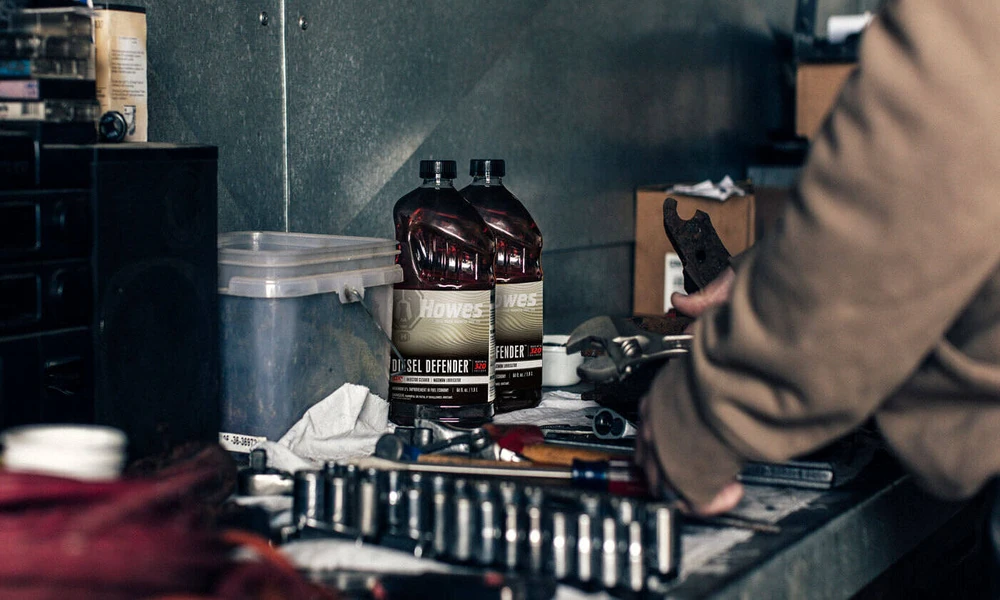
- Diesel Defender is a lubricator and injector cleaner with IDX4 detergent. It targets deposits inside injectors, which common rail systems collect because of heat and tight clearances. You can use it any time of year alongside Diesel Treat.
- Meaner Power Kleaner is a one-tank deep clean. I suggest it when maintenance has fallen behind or when you buy a used truck with an unknown history.
A Simple Routine I Recommend
1. Add a conditioner at every fill-up, using the rate on the label.
2. Raise the dose as the temperature drops.
3. Keep a rescue product in the cab from late fall through winter.
4. Use a deeper cleaner when a vehicle has high mileage or a gap in its care.
5. Drain your water separator on a regular schedule.
A conditioner gives ULSD the lubricity, water control, and cold flow help that the fuel lacks by itself. Howes Diesel Treat covers those needs in one bottle, and the company stands behind it with real guarantees. Start with that, build the routine above, and your fuel system will have what it needs to run well.