

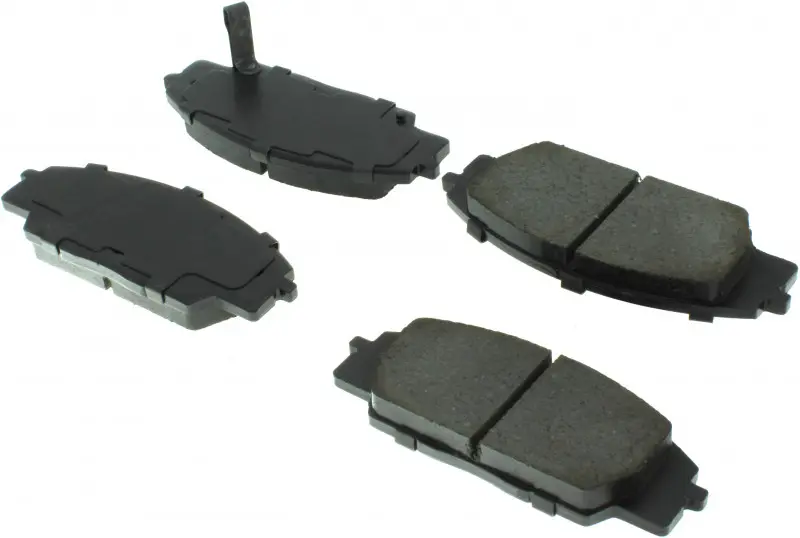
MK Kashiyama components have earned their place in professional workshops through a process that has nothing to do with persuasive sales pitches and everything to do with demonstrated performance under pressure. Workshops are unsentimental environments. The technicians who run them make sourcing decisions based on evidence accumulated over years of fitting, testing and observing how components behave once they leave the bench and meet the road. When a brand earns consistent loyalty in that environment, it is worth examining precisely why.
The Workshop Perspective
Professional workshops operate under a different kind of accountability than the average motorist. When a technician fits a brake component, that decision carries a professional and, in some cases, a legal dimension. If the part fails or underperforms, the consequences extend well beyond an inconvenient return visit. Reputation, liability and the safety of the driver are all implicated in every fitment decision.
It is within that context that the preference for MK Kashiyama components becomes most legible. The brand’s origins in original equipment manufacturing mean that its products have been validated not merely by aftermarket testing but by the far more demanding standards that vehicle manufacturers apply before a component is permitted anywhere near a new car rolling off an assembly line. That validation history provides workshops with a level of confidence that is difficult to replicate through independent testing alone.
For workshops across Singapore, where the vehicle fleet is diverse, traffic conditions are demanding and the tropical climate accelerates component wear, sourcing decisions are made with particular care. MK Kashiyama brake parts appear regularly on the preferred supplier lists of established workshops precisely because they reduce the variables that cause problems after the job is done.
Consistency as a Professional Standard
Ask experienced technicians what they value most in a brake component supplier, and the answer rarely begins with price. It begins with consistency. A pad that performs well one month and differently the next, due to batch variation or inconsistent quality control, creates problems that are difficult to diagnose and damaging to a workshop’s standing with its customers.
MK Kashiyama addresses this concern through manufacturing protocols that reflect its OEM heritage. The quality control systems applied to its aftermarket components mirror those used in vehicle production supply chains, where deviation from specification is treated as an unacceptable risk rather than an acceptable tolerance. The result is a product range where:
- Friction coefficients remain stable across production batches, ensuring predictable braking behaviour from one fitment to the next
- Dimensional tolerances are held tightly enough that caliper and rotor fitment proceeds without modification or adjustment
- Material compositions are verified through batch testing before components enter the distribution network
- Noise and vibration characteristics are assessed as part of the quality assurance process rather than left to chance in the field
That kind of systematic quality management is not universal across the aftermarket. Its presence in the MK Kashiyama production process is one of the clearer explanations for why workshops return to the brand reliably rather than treating it as one option among many.
The Range That Covers the Fleet
Singapore’s vehicle population is a study in diversity. Japanese, Korean and European models share the same expressways and carparks, each with brake systems designed to different specifications and operating assumptions. A workshop that services this full range of vehicles needs a brake component supplier whose catalogue is deep enough to cover it without requiring multiple sourcing relationships for different vehicle categories.
MK Kashiyama’s application catalogue addresses this directly. The range extends across:
Japanese passenger vehicles
High-volume models with well-documented brake system specifications and consistent fitment data across model generations
Korean vehicles
Both mainstream and premium model lines, with pad and rotor variants matched to the braking configurations common across those platforms
European passenger cars and light commercials
Applications that typically demand tighter tolerances and greater thermal stability from friction materials
Performance and sports variants
Higher-specification formulations for vehicles where braking demands exceed the envelope of standard compound pads
As one workshop supervisor operating out of a busy service centre in Jurong noted: “We work on everything here. Having one brake supplier that covers most of what comes through the door makes the job much simpler. With MK Kashiyama, we rarely have to go looking elsewhere.”
Thermal Performance in a Tropical Climate
Singapore’s climate introduces a baseline condition that shapes brake component selection in ways that workshops in cooler markets do not always need to consider. Ambient temperatures that remain elevated throughout the year mean that brake systems are already operating at higher starting temperatures before the first pedal application of the day. Combined with dense urban traffic patterns that generate frequent, repeated braking events, the thermal load placed on components is considerable.
MK Kashiyama brake pads and rotors are specified to handle this reality. The ventilated rotor designs dissipate heat actively during braking events, reducing the risk of thermal fade that compromises stopping distances under sustained load. Pad compounds are formulated to maintain stable friction characteristics across the temperature ranges that Singapore’s conditions routinely produce, rather than delivering strong initial performance that degrades as operating temperatures climb.
What Consistent Choice Reveals
The pattern of workshop adoption tells its own story. When professional technicians, operating under real accountability and with direct experience of what component failure looks like, return consistently to a single brand across years of fitment decisions, that pattern is not coincidental. It reflects an accumulated body of evidence that the product delivers on its specifications reliably enough to stake a professional reputation on.
The workshops of Singapore that specify mk kashiyama as their preferred brake component source have made that assessment clearly, and the performance record of MK Kashiyama continues to justify the confidence they have placed in it.